

DIESEL
GASOLINE
BITUMEN
BASE OILS

PETROLEUM PRODUCTS
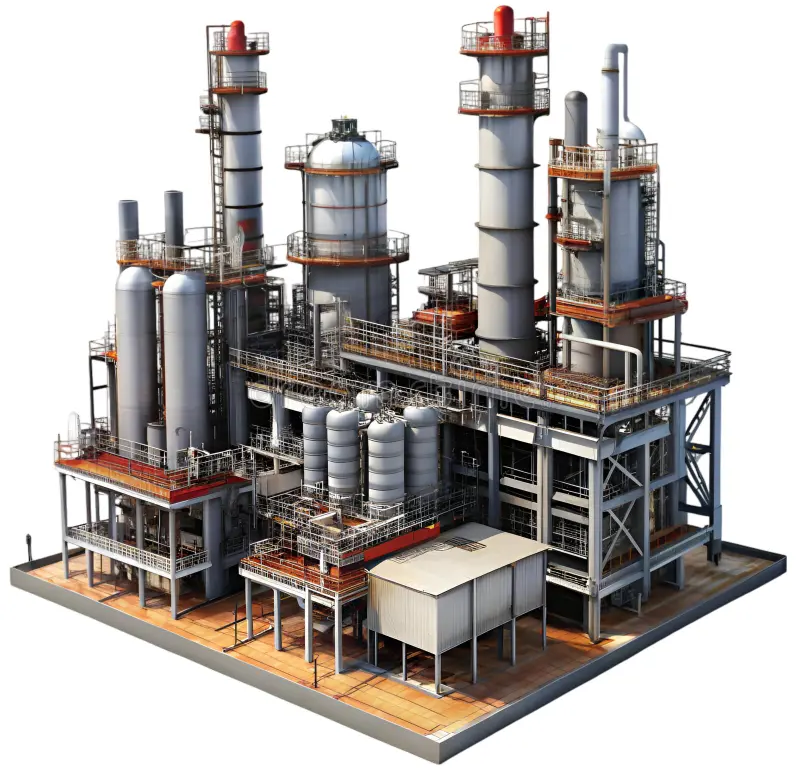
Oil refineries will blend various feedstocks, mix appropriate additives, provide short-term storage, and prepare for bulk loading to trucks, barges, product ships, and railcars , Gasses like propane and methane are stored within petroleum.
Liquid fuels blending (producing automotive and aviation grades of gasoline, kerosene, various aviation turbine fuels, and diesel fuels, adding dyes, detergents, antiknock additives, oxygenates, and anti-fungal compounds as required).
Shipped by barge, rail, and tanker ship , May be shipped regionally in dedicated pipelines to point consumers, particularly aviation jet fuel to major airports, or piped to distributors in multi-product pipelines using product separators called pipeline inspection gauges ("pigs").
Lubricants ( produces light machine oils, motor oils, and greases, adding viscosity stabilizers as required), usually shipped in bulk to an offsite packaging plant.
Paraffin wax, used in illumination (candle wax) and other uses.
May be shipped in bulk to a site to prepare as packaged blocks.
Slack wax, a raw refinery output comprising a mixture of oil and wax used as a precursor for scale wax and paraffin wax and as-is in non-food products such as wax emulsions, construction board, matches, candles, rust protection, and vapour barriers.
Sulfur, by-product of sulfur removal from petroleum, which contain percent of organosulfur compounds.
Bulk tar shipping for offsite unit packaging for use in tar-and-gravel roofing or similar uses.
Asphalt, used as a binder for gravel to form asphalt concrete, which is used for paving roads, lots, etc. An asphalt unit prepares bulk asphalt for shipment.
Petroleum coke, used in specialty carbon products such as certain types of electrodes, or as solid fuel.
Petrochemicals or petrochemical feedstocks such as ethylene,




Base oils are used to manufacture products including lubricating greases, motor oil and metal processing fluids.
Different products require different compositions and properties in the oil.
One of the most important factors is the liquid’s viscosity at various temperatures.
Whether or not a crude oil is suitable to be made into a base oil is determined by the concentration of base oil molecules as well as how easily these can be extracted.
Base oil is produced by means of refining crude oil.
This means that crude oil is heated in order to separate various distillates from one another. During the heating process, light and heavy hydrocarbons are separated the light ones can be refined to make petrol and other fuels, while the heavier ones are suitable for bitumen and base oils.
There are large numbers of crude oils all around the world that are used to produce base oils.
The most common one is a type of paraffinic crude oil, although there are also naphthenic crude oils that create products with better solubility and very good properties at low temperatures.
By using hydrogenation technology, in which sulfur and aromatics are removed using hydrogen under high pressure, extremely pure base oils can be obtained, which are suitable when quality requirements are particularly stringent.
the American Petroleum Institute (API), categorized base oils into five main groups.
Chemical and physical characteristics are defined for Groups I through III that reflect how refined they are, correlating in some way to high and low-temperature viscosity, oxidative stability, volatility, and so on.
Group IV oils comprise polyalphaolefins by definition, and Group V oils are those that do not fit into any previous category.
The intent of such categorization is to help ensure that engine oils retain performance when different base oils are used.
Group I
Originating in the 1930s, the least refined type which is produced by solvent refining.
It usually consists of conventional petroleum base oils. An improvement to the refining process in the 1960s called hydro-treating made this base oil more stable, less reactive, and longer lasting than the earlier base oils.
API defines group I as "base stocks contain less than 90 percent saturates and/or greater than 0.03 percent sulfur and have a viscosity index greater than or equal to 80 and less than 120".
Group II
Originating in 1971, a better grade of petroleum base oil, which may be partially produced by hydrocracking. All impurities will be removed from the oil leading to clearer color.
API defines group II as "base stocks contain greater than or equal to 90 percent saturates and less than or equal to 0.03 percent sulfur and have a viscosity index greater than or equal to 80 and less than 120".
Group III
Originating in 1993, the most refined grade of petroleum base oil, since they are fully produced by hydrocracking, hydroisomerization, and hydrotreating, which make these oils purer.
API defines group III as "base stocks contain greater than or equal to 90 percent saturates and less than or equal to 0.03 percent sulfur and have a viscosity index greater than or equal to 120".
Group IV
Originating in 1974, consists of synthetic oils made of polyalphaolefins (PAO).
Group IV base oils have a viscosity index range of 125 - 200.
Polyalphaolefin oils have a higher oxidative stability in extreme temperatures, and also have exceptionally low pour points, which makes them much more suitable for use in very cold weather (as found in northern Europe), as well as in very hot weather (as in Middle East).
Group V
Originating in the 1940s, any type of base oil other than mentioned in the previously defined groups.
Group V oils include alkylated naphthalenes ( ExxonMobil Syntetic ) and esters.
Unofficial Classifications
Unofficial base oil classifications are not recognized by the American Petroleum Institute (API),
however, they are widely used and marketed for motor oils and automatic transmission fluids.
Group II+
Originating in the 1990s, a more refined grade of petroleum Group II base oil, produced by Hydrotreating. Group II+ base oils have a high viscosity index at the higher end of the API Group II range.
The viscosity index is 110-115 minimum.
Group III+
Originating in 2015, produced by a gas to liquids (GTL) process.
Group III+ base oils have a Very High Viscosity Index (VHVI) at the higher end of the API Group III range.
The viscosity index is 130-140 minimum.
Group VI
Consists of synthetic oils made of Poly-internal-olefins (PIO).
Poly-internal-olefins (PIO) oils are similar to Poly-alpha-olefins (PAO), but use different chemicals in the synthesis process to obtain an even higher viscosity index. (VI)

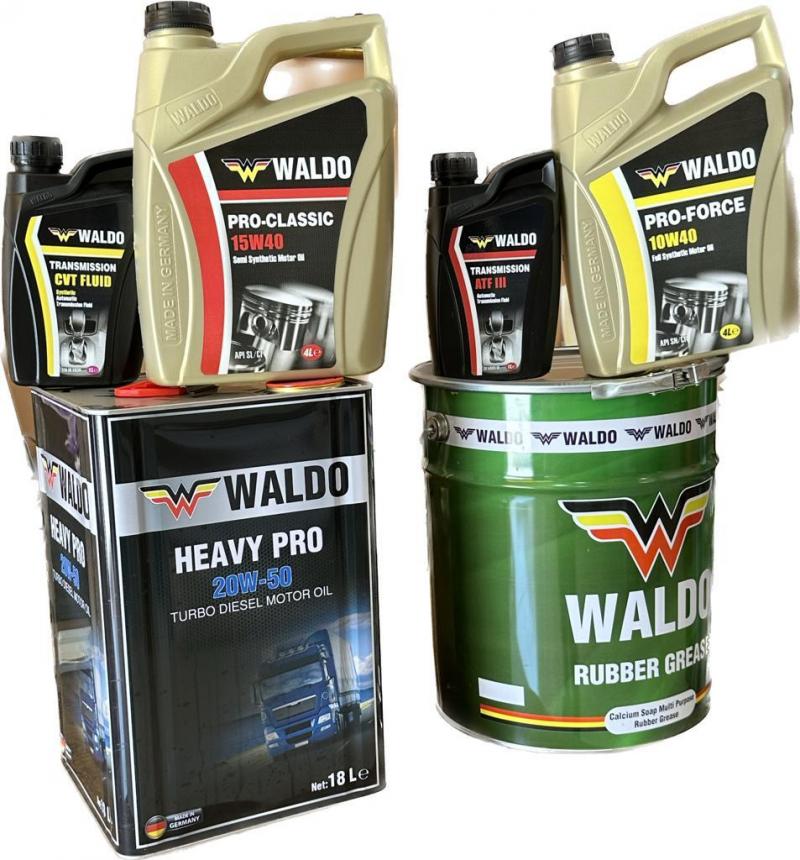



A lubricant (sometimes shortened to lube)
is a substance that helps to reduce friction between surfaces in mutual contact, which ultimately reduces the heat generated when the surfaces move.
It may also have the function of transmitting forces, transporting foreign particles, or heating or cooling the surfaces. The property of reducing friction is known as lubricity.
In addition to industrial applications, lubricants are used for many other purposes.
Other uses include cooking (oils and fats in use in frying pans and baking to prevent food sticking),
to reduce rusting and friction in machinery, through the use of motor oil and grease, bioapplications on humans (e.g., lubricants for artificial joints),
ultrasound examination, medical examination, and sexual intercourse.
It is mainly used to reduce friction and to contribute to a better, more efficient functioning of a mechanism.
A good lubricant generally possesses the following characteristics :
A high boiling point and low freezing point (in order to stay liquid within a wide range of temperature)
A high viscosity index
Thermal stability
Hydraulic stability
Demulsibility
Corrosion prevention
A high resistance to oxidation
Pour point (the minimum temperature at which oil will flow under prescribed test conditions)
A large number of additives are used to impart performance characteristics to the lubricants.
Modern automotive lubricants contain as many as ten additives, comprising up to 20% of the lubricant, the main families of additives are :
Pour point depressants are compounds that prevent crystallization of waxes.
Long chain alkylbenzenes adhere to small crystallites of wax, preventing crystal growth.
Anti-foaming agents are typically silicone compounds which increase surface tension in order to discourage foam formation.
Viscosity index improvers (VIIs) are compounds that allow lubricants to remain viscous at higher temperatures.
Typical VIIs are polyacrylates and butadiene.
Antioxidants suppress the rate of oxidative degradation of the hydrocarbon molecules within the lubricant.
At low temperatures, free radical inhibitors such as hindered phenols are used, e.g. butylated hydroxytoluene.
At temperatures >90 °C, where the metals catalyze the oxidation process, dithiophosphates are more useful.
In the latter application the additives are called metal deactivators.
Detergents ensure the cleanliness of engine components by preventing the formation of deposits on contact surfaces at high temperatures.
Corrosion inhibitors (rust inhibitors) are usually alkaline materials, such as alkylsulfonate salts, that absorb acids that would corrode metal parts.
Anti-wear additives form protective 'tribofilms' on metal parts, suppressing wear.
They come in two classes depending on the strength with which they bind to the surface. Popular examples include phosphate esters and zinc dithiophosphates.
Extreme pressure (anti-scuffing) additives form protective films on sliding metal parts.
These agents are often sulfur compounds, such as dithiophosphates.
Friction modifiers reduce friction and wear, particularly in the boundary lubrication regime where surfaces come into direct contact.